
Annapurna Circuit Trek
Overview
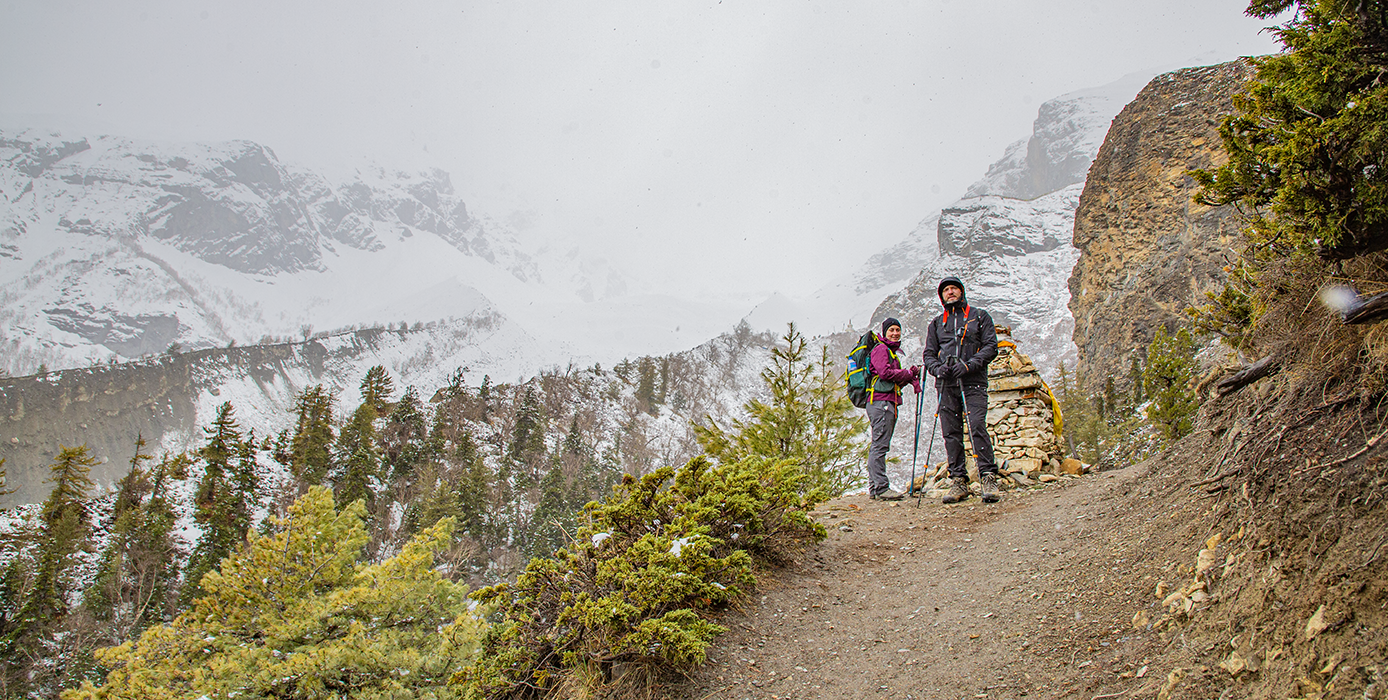
The Annapurna Circuit Trek is one of Nepal’s most spectacular Himalayan adventures, following a historic route through remarkable changes in landscape, culture, and altitude. The journey leads from lush forests, terraced hills, and traditional villages into the high alpine valleys of Manang and Mustang. Along the way, enjoy breathtaking views of Annapurna, Gangapurna, Tilicho Peak, and Dhaulagiri, experience the warm hospitality of mountain communities, and cross the legendary Thorong La Pass at 5,416 meters. The trek combines natural beauty, cultural discovery, challenging mountain trails, and unforgettable Himalayan experiences.
TOUR ITINERARY
A day-by-day breakdown of your journey through Annapurna Circuit Trek.
Day 1
Fri, Apr 02, 2027
Arrival in Kathmandu
Elevation 1400 M. Free Day/ Trip Prepration.
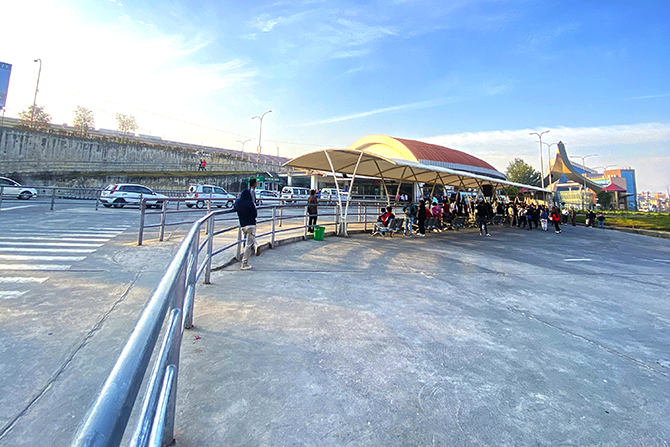
Upon arrival at Tribhuvan International Airport, our representative will welcome you and transfer you to your hotel in Thamel. After check-in, meet your trekking guide for a briefing covering the route, permits, safety, altitude awareness, and preparations. If time permits, take a leisurely walk around Thamel and explore its lively streets, shops, cafés, and local atmosphere. Overnight at a 3-star hotel in Kathmandu.
Day 2
Sat, Apr 03, 2027
Drive to Besisahar (760m) & Syange (1,100m)
About 6-7 hour drive (180+25 km)
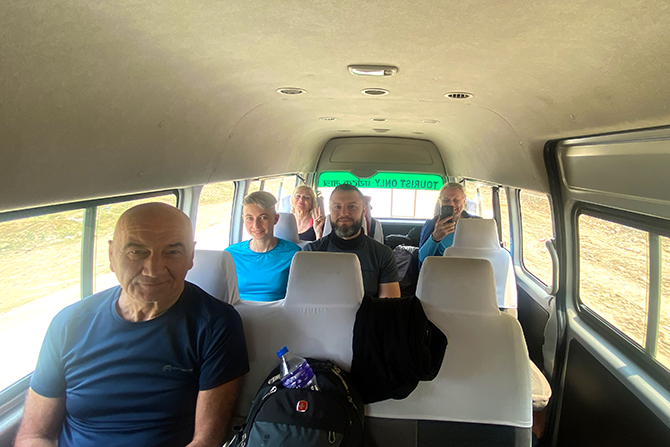
After breakfast, drive from Kathmandu to Besisahar through scenic countryside, following the Prithvi Highway past terraced hills, rivers, and traditional settlements. After lunch, continue by four-wheel-drive jeep toward Syange along the Marsyangdi River. The road passes waterfalls, forested hills, and remote mountain villages. Upon arrival in Syange, settle into your teahouse and enjoy the peaceful Himalayan surroundings. Overnight at a teahouse.
Day 3
Sun, Apr 04, 2027
Trek to Dharapani (1,960m)
First day on trail Distance 16 KM, 4-5 hours walk, Altitude 1960 M.
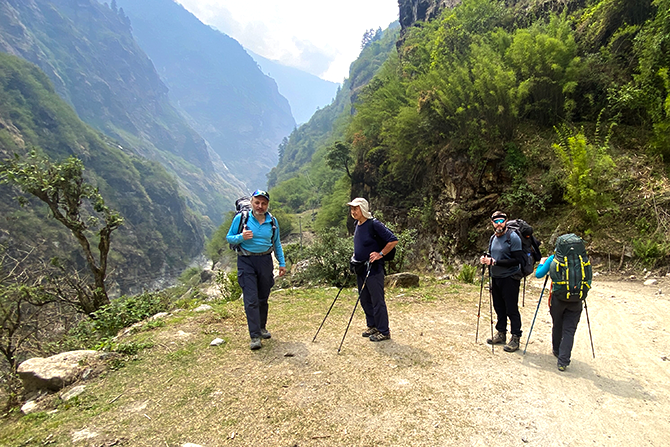
Begin your trek along the Marsyangdi River, walking through lush forests and passing cascading waterfalls, suspension bridges, and traditional mountain villages. Continue through Jagat and reach Tal, a beautiful settlement beside the river, where you can stop for lunch. The trail then climbs gradually through pine forests and dramatic landscapes before reaching Dharapani. This important village marks the junction of the Annapurna Circuit and Manaslu trekking routes. Overnight at a teahouse.
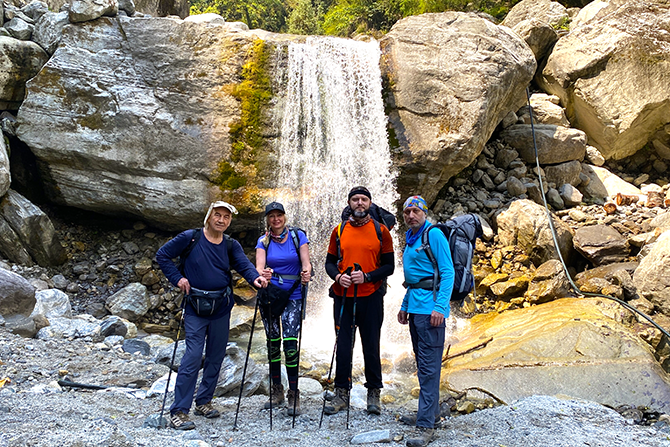
Day 4
Mon, Apr 05, 2027
Trek to Chame
Distance about 16 KM. Altitude 2670 M.
Today’s trail follows the Marsyangdi Valley through peaceful pine and fir forests, passing Bagarchhap, Danaque, and Timang. From Timang, enjoy impressive views of Lamjung Himal and Annapurna II. Continue along forested trails and across mountain streams before reaching Chame, the administrative center of Manang District. Surrounded by spectacular peaks, Chame is a pleasant mountain settlement. If time permits, relax in the nearby natural hot springs. Overnight at a teahouse.
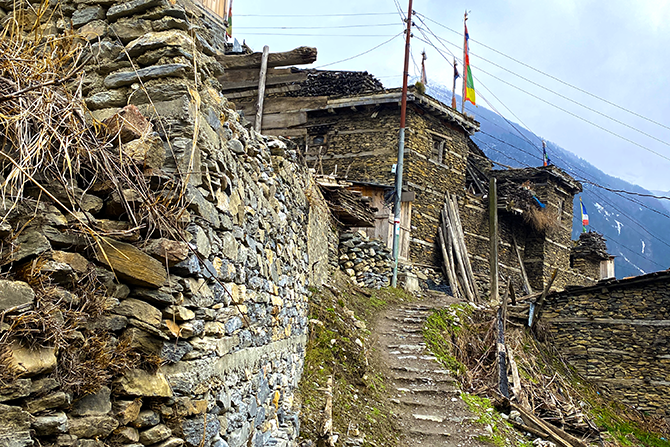
Day 5
Tue, Apr 06, 2027
Trek to Upper Pisang (3,300m)
Distance to Upper Pisang 14 KM. about 5 hours walk elevation. 3,300 M.
After breakfast, follow the trail through pine forests and apple orchards as the valley gradually widens. Cross the Marsyangdi River and continue along dramatic mountain paths with magnificent views of Annapurna II and Pisang Peak. The landscape opens into a broad glacial valley surrounded by towering peaks. Arrive at Upper Pisang, a traditional Tibetan-style village with stone houses and an ancient monastery. Overnight at a teahouse.
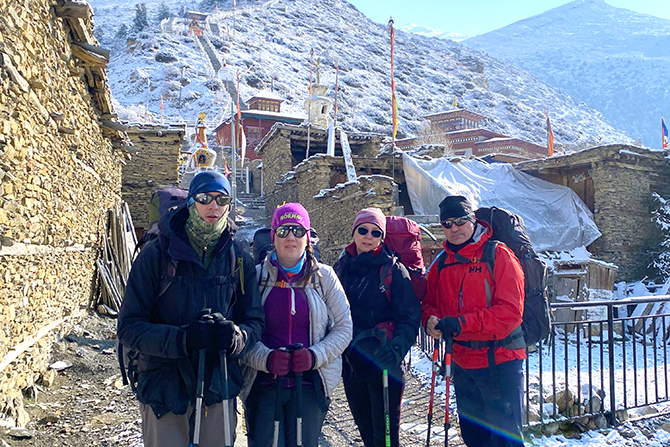
Day 6
Wed, Apr 07, 2027
Trek to Manang (3,540m)
Distance about 18 KM. 6-7 hours walk, Altitude 3,540 M.
Take the spectacular high trail through Ghyaru and Ngawal 3,660 M., enjoying magnificent panoramas of Annapurna II, III, and IV, Gangapurna, Tilicho Peak, and Pisang Peak. Pass traditional Tibetan-influenced villages decorated with prayer wheels, chortens, and colorful prayer flags. Continue through the Manang Valley, passing Braga and its historic monastery, before reaching Manang. Spend the afternoon exploring the village or relaxing in the mountain surroundings. Overnight at a teahouse.
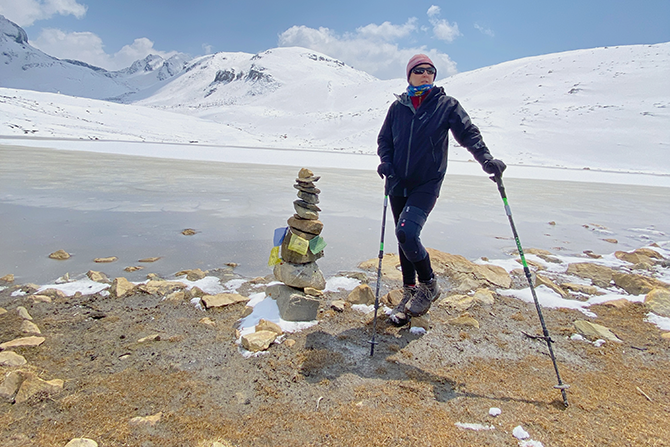
Day 7
Thu, Apr 08, 2027
Manang-Acclimatization "Hike to Ice Lake" (4,600m)
Distance 9-10 KM. Altitude 4,620 m./ 15,157 ft.
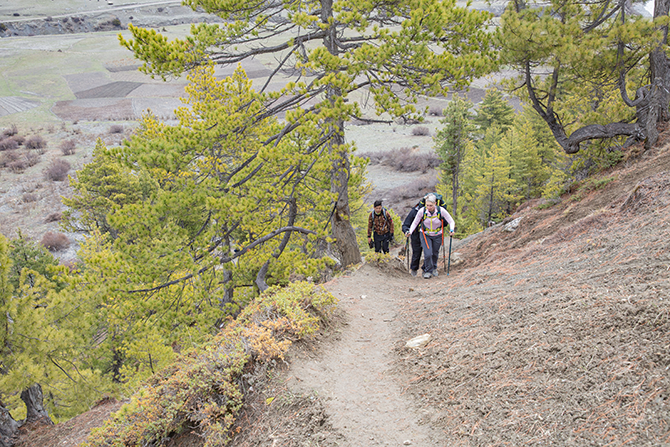
Today is dedicated to acclimatization before ascending farther into the high Himalayas. After breakfast, hike toward Ice Lake, also known as Kicho Tal, at approximately 4,600 meters. The demanding ascent rewards you with spectacular views of the Annapurna range, Gangapurna, Tilicho Peak, and the Chulu peaks. After enjoying the mountain scenery, descend carefully to Manang and spend the evening resting and preparing for the next stage. Overnight at a teahouse.
Day 8
Fri, Apr 09, 2027
Manang-Acclimatization "Hike to Milarepa Cave"
Distance 6-7 KM. Altitude 4,000 M./ 13,123 ft, 2-3 hours walk.
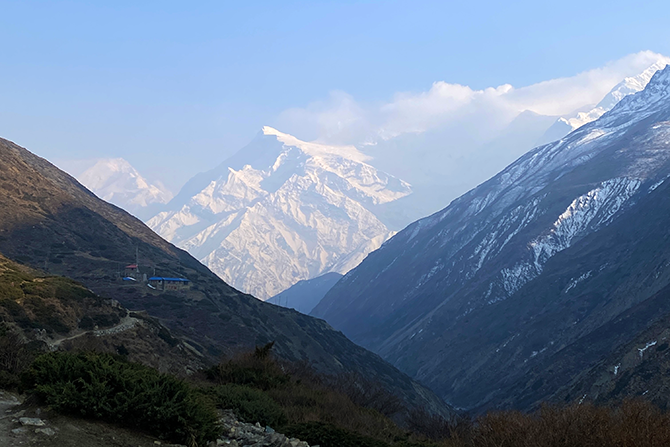
Enjoy another acclimatization day with a hike to Milarepa Cave, associated with the renowned Tibetan Buddhist meditation master Milarepa. The trail passes through rugged alpine terrain and offers beautiful views over the Marsyangdi Valley and surrounding mountains. Spend time exploring the peaceful spiritual site before returning to Manang for lunch. The additional night at altitude allows your body to adapt before the challenging ascent toward Thorong La Pass. Overnight at a teahouse.
Day 9
Sat, Apr 10, 2027
Trek to Yak Kharka (4,050m)
Distance 10.5 KM. 4-5 hours walk, Altitude 4036 M/13,241 ft.
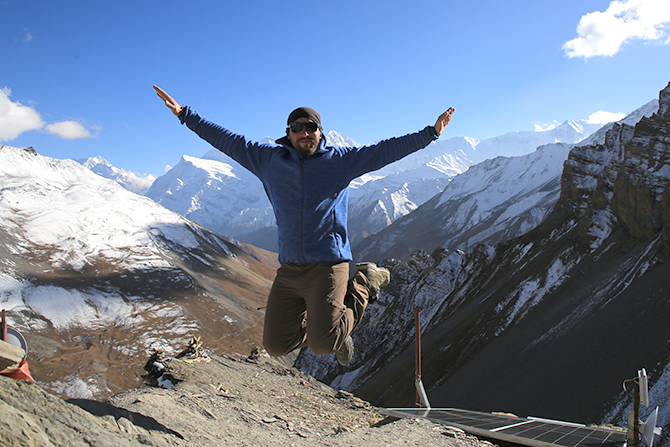
Leave Manang and follow the trail gradually upward through alpine meadows and increasingly sparse vegetation. Pass Gunsang and enjoy impressive views of Annapurna III, Gangapurna, and Chulu West. Along the route, you may see grazing yaks and other wildlife adapted to the high Himalayan environment. Continue steadily to Yak Kharka, a small settlement traditionally used as seasonal grazing land. Spend the afternoon resting and acclimatizing for the ascent toward Thorong Phedi. Overnight at a teahouse.
Day 10
Sun, Apr 11, 2027
Trek to Thorung Phedi (4,525m) "Hike to Highcamp (4,900m)"
Distance 7 KM. 2 hours walk, Altitude 4544 M/14,900 ft./ Distance 1.5-2 KM. 1.5-2 hours walk, Altitude 4,850 M/15,900 ft.
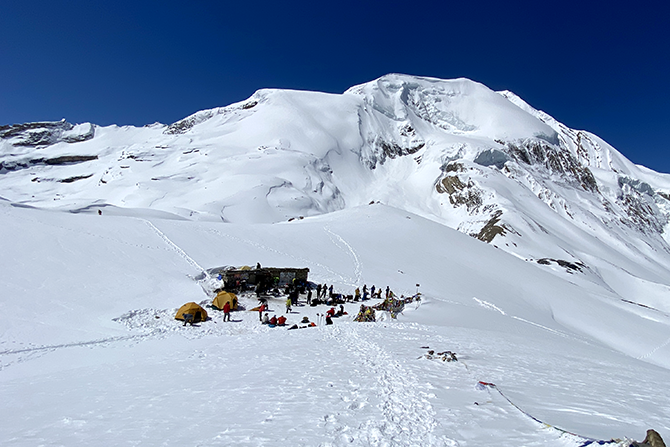
Today’s relatively short trek prepares you for the crossing of Thorong La Pass. Follow the rocky trail across hillsides, small streams, and mountain bridges toward Thorong Phedi, the final settlement below the pass. Depending on weather, fitness, and acclimatization, you may continue for approximately one hour to High Camp. Spend the afternoon resting, hydrating, and preparing for the early start tomorrow. Overnight at a mountain teahouse at Thorong Phedi or High Camp.
Day 11
Mon, Apr 12, 2027
Trek to Thorung Pass (5,416m)-Muktinath
Thorung Phedi to High Camp and Thorung La Pass:
Approx. 7.5 km | 4–5 hours of walking | Max. altitude: 5,416 m (17,770 ft)
Thorung La Pass to Muktinath:
Approx. 14 km | 5–6 hours of walking | Muktinath altitude: 3,800 m (12,467 ft)
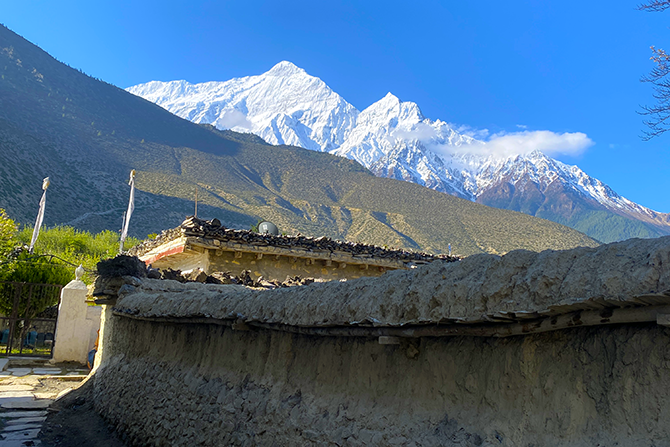
Begin early for the challenging ascent to Thorong La Pass, the highest point of the trek at 5,416 meters. From the summit, enjoy breathtaking views across the Annapurna and Dhaulagiri ranges before beginning the long descent toward Muktinath. Prayer flags and dramatic high-altitude landscapes accompany the trail. Muktinath is a sacred pilgrimage site revered by both Hindus and Buddhists. If time permits, visit the temple and sacred water spouts. Overnight at a teahouse.
Day 12
Tue, Apr 13, 2027
Jeep Drive to Pokhara
Distance 175 KM. 5-6 Hours drive in a Jeep.
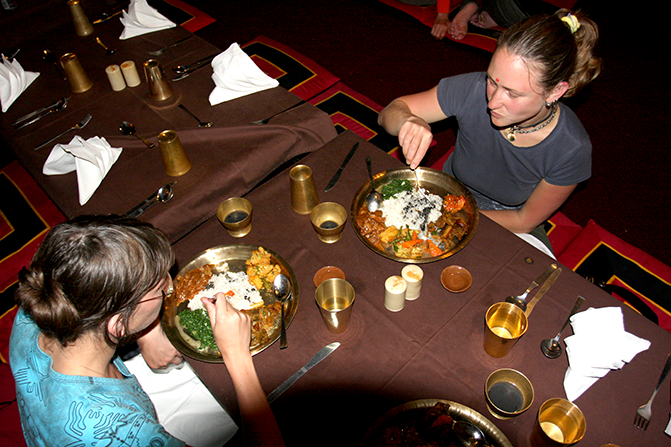
After breakfast, drive from Muktinath through the spectacular Kali Gandaki Valley toward Pokhara. The route passes Jomsom, Marpha, traditional Thakali villages, and dramatic landscapes between the Annapurna and Dhaulagiri ranges. Continue through Tatopani and Beni before reaching the greener middle hills. Upon arrival in Pokhara, check into your hotel and relax beside beautiful Phewa Lake. Enjoy the evening exploring Lakeside, dining at a local restaurant, or simply resting after the trek. Overnight at a 3-star hotel.
Day 13
Wed, Apr 14, 2027
Pokhara Free Day
Full day in Pokhara, aday on your own.
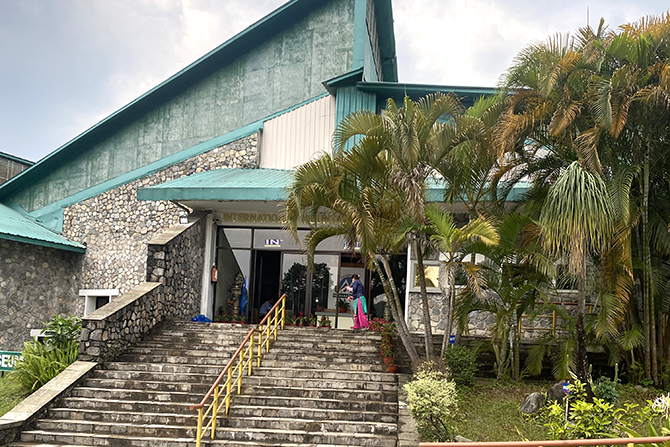
Enjoy a relaxing day in Pokhara after completing the high-altitude section of your trek. An early-morning excursion to Sarangkot offers spectacular sunrise views of Annapurna, Machhapuchhre, and Dhaulagiri. Later, explore attractions such as Davis Falls, Gupteshwor Mahadev Cave, or the International Mountain Museum. You may also enjoy a peaceful boat ride on Phewa Lake or spend the afternoon relaxing at a lakeside café. Overnight at a 3-star hotel.
Day 14
Thu, Apr 15, 2027
Fly to Kathmandu
Flight time approx. 30 minutes in domestic flight.
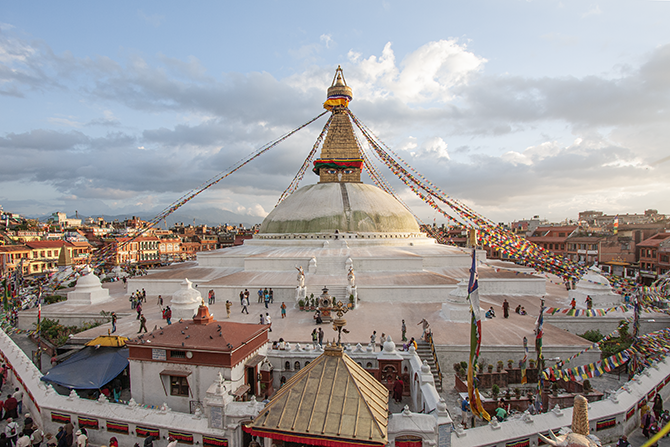
After breakfast, take a scenic domestic flight from Pokhara to Kathmandu, enjoying aerial views of the Himalayan range and surrounding landscapes. Upon arrival, transfer to your hotel in Thamel. The remainder of the day is free for shopping, sightseeing, relaxation, or exploring Kathmandu’s vibrant streets. You may purchase traditional handicrafts and trekking souvenirs before enjoying a final evening in Nepal. Overnight at a 3-star hotel in Kathmandu.
Day 15
Fri, Apr 16, 2027
Departure
Checkout from your hotel and transfer to International Airport.
Your Annapurna Circuit adventure comes to an end today. Depending on your international flight schedule, enjoy some free time for last-minute shopping or relaxation. Our representative will transfer you to Tribhuvan International Airport in time for your departure. We recommend arriving at the airport at least three hours before your international flight. Take home unforgettable memories of spectacular Himalayan landscapes, mountain villages, rich cultures, and warm Nepalese hospitality. Safe travels!
COST DETAILS
What is Included
3-star hotel accommodation in Kathmandu (2 nights) and Pokhara (2 nights)
Teahouse accommodation during the trek
English-speaking trekking guide
Porter service (1 porter for 2 trekkers)
ACAP permit and TIMS card
Transportation: Kathmandu–Besisahar and Muktinath–Pokhara
Domestic flight: Pokhara–Kathmandu
Staff insurance and first aid support
Trek completion certificate
Not Included
Lunch and dinner during the trek
Drinks and personal expenses
Hot showers and charging fees if payable
Tips for staff
International airfare
Travel insurance (mandatory)
Personal trekking gear
Nepal visa fees
Meals on trek (approx. USD 35–40/day)
Trek through one of Nepal’s most diverse and iconic Himalayan routes.
Cross the spectacular Thorong La Pass at 5,416 meters, the highest point of the trek.
Enjoy breathtaking views of Annapurna, Dhaulagiri, Gangapurna, Tilicho Peak, and surrounding peaks.
Discover the cultural and spiritual heritage of Manang, Mustang, Muktinath, and the Kali Gandaki Valley.
Book Your Trek
Complete your details below for the Apr 02, 2027 departure. Our team will verify guide availability and contact you with booking confirmation details.
Important:
HEALTH & SAFETY: Before traveling to Nepal, it is advisable to consult your doctor about your overall health and fitness for high-altitude trekking. Routine vaccinations and appropriate medical advice are recommended. Bring a personal first-aid kit and sufficient supplies of any prescribed medications, as medical facilities are limited in remote mountain areas. If you wear glasses or use prescription medication, carry extra supplies. Maintaining good fitness, eating nutritious meals, and staying well hydrated are essential for a safe and enjoyable trek.
ALTITUDE & ACCLIMATIZATION: Altitude is an important consideration on the Annapurna Circuit. Acute Mountain Sickness (AMS) can occur at higher elevations and may cause symptoms such as headache, fatigue, nausea, dizziness, or difficulty sleeping. Our itinerary includes acclimatization days in Manang to help your body adjust gradually. Walk at a steady pace, avoid unnecessary exertion, drink plenty of water, and inform your guide immediately if you experience any symptoms. If symptoms become severe, descending to a lower altitude is the safest course of action.
WEATHER & CONDITIONS: The Annapurna region experiences significant variations in weather and temperature. Lower elevations are generally warmer and greener, while the higher areas are colder, drier, and often windy. Weather can change rapidly, particularly above 3,000 meters, with possible snowfall, strong winds, and sudden temperature drops. Sunny days can be followed by very cold nights. Dressing in layers allows you to adjust comfortably to changing conditions throughout the trek.
PACKING: Packing wisely is essential for comfort and efficiency on the trail. Bring lightweight and practical clothing, including thermal layers, trekking trousers, a warm jacket, gloves, a hat, and a waterproof outer layer. Good-quality, comfortable trekking boots are essential, along with suitable footwear for the evenings. Avoid unnecessary heavy items and electronics. A power bank is useful where charging facilities are limited. If using porter services, keep your main luggage within the agreed weight limit.
DAYPACK ESSENTIALS: Your daypack should contain drinking water, sunscreen, sunglasses, snacks, a camera, and an extra layer of clothing. Keep essential personal items, basic toiletries, important documents, valuables, and any medications you may need during the day with you. A lightweight and well-organized daypack will make your daily walks more comfortable and enjoyable.
EMERGENCY SUPPORT: Our trekking guides are trained in basic first aid and carry essential medical supplies. Travel insurance covering high-altitude trekking, medical treatment, and emergency evacuation is strongly recommended and should be arranged before departure. In the event of serious illness or injury, appropriate emergency assistance and evacuation can be coordinated according to the situation and available services. Your guide will monitor your condition and assist with safety procedures throughout the trek..
Trek FAQs
The best windows are Spring (March to May) and Autumn (September to November). During these months, the weather is stable, the skies are clear, and the views of the peaks are at their best.
The trek is considered moderately to highly challenging, requiring good physical fitness and the ability to walk 5–8 hours daily, including crossing the 5,416-meter Thorong La Pass.
Most itineraries take 10–18 days, depending on your starting point, route, acclimatization schedule, and available transportation.
Yes. Trekkers need an Annapurna Conservation Area Permit (ACAP) and a TIMS (Trekkers' Information Management System) Card, subject to current Nepal tourism regulations.
The highest point is Thorong La Pass (5,416 m / 17,769 ft), one of the world's highest trekking passes.
Yes, beginners with good fitness and proper preparation can complete the trek, especially with a well-planned itinerary that allows adequate acclimatization.
Essential items include layered clothing, sturdy trekking boots, a warm sleeping bag, trekking poles, a down jacket, rain gear, sunscreen, a reusable water bottle, and a basic first-aid kit.
Your's Guide
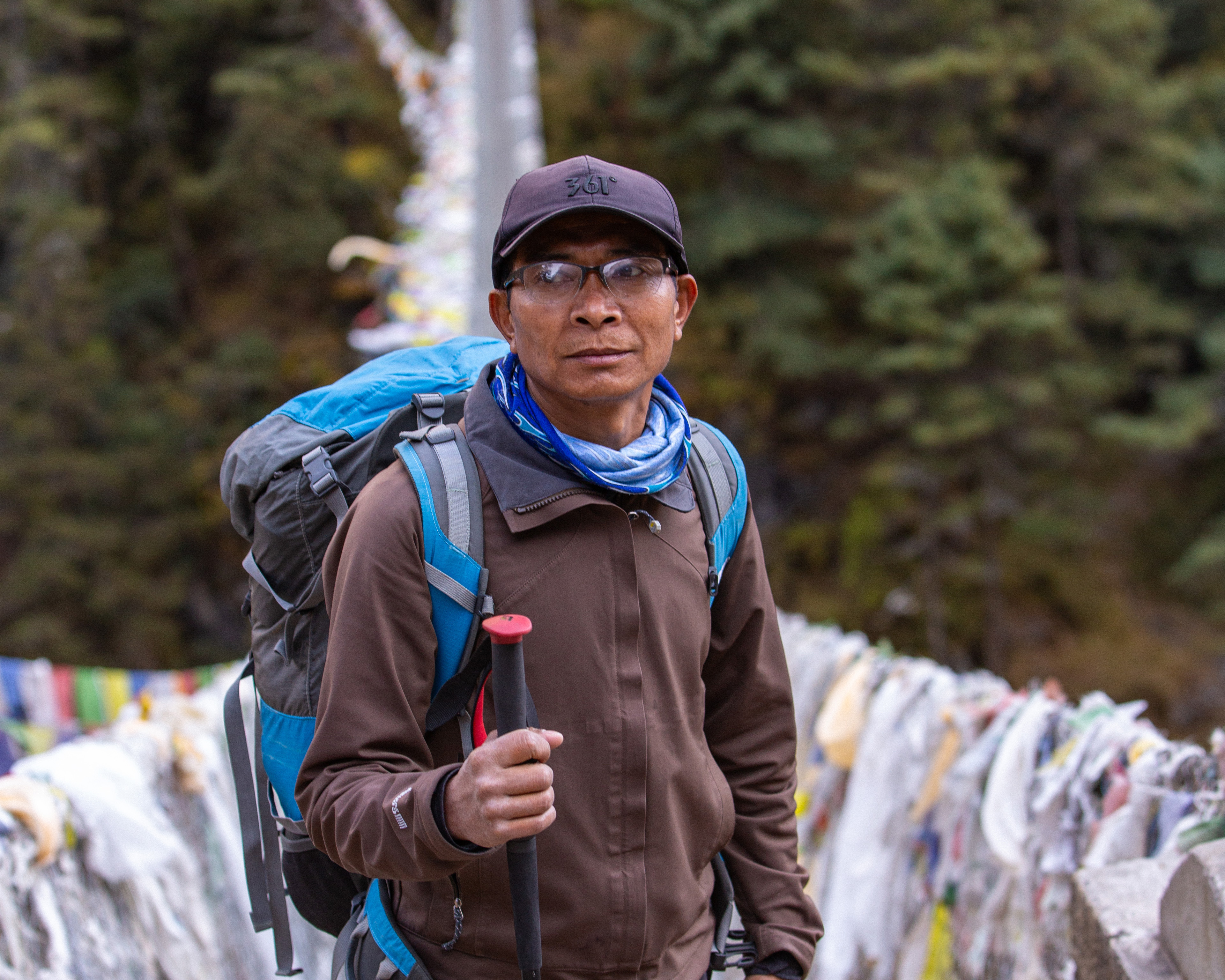
Gyan Tamang
Lead Alpine Instructor & Nepal Specialist
Gyan Tamang is a highly experienced Lead Alpine Instructor and Nepal Specialist with a deep passion for the Himalayas. With years of guiding trekkers and climbers across Nepal’s iconic mountain regions, he combines expert technical skills with extensive local knowledge. Dedicated to safety, professionalism, and creating unforgettable adventures, Gyan helps travelers confidently explore Nepal’s breathtaking landscapes while sharing the rich culture, traditions, and hospitality of the mountain communities.
We're Associated With